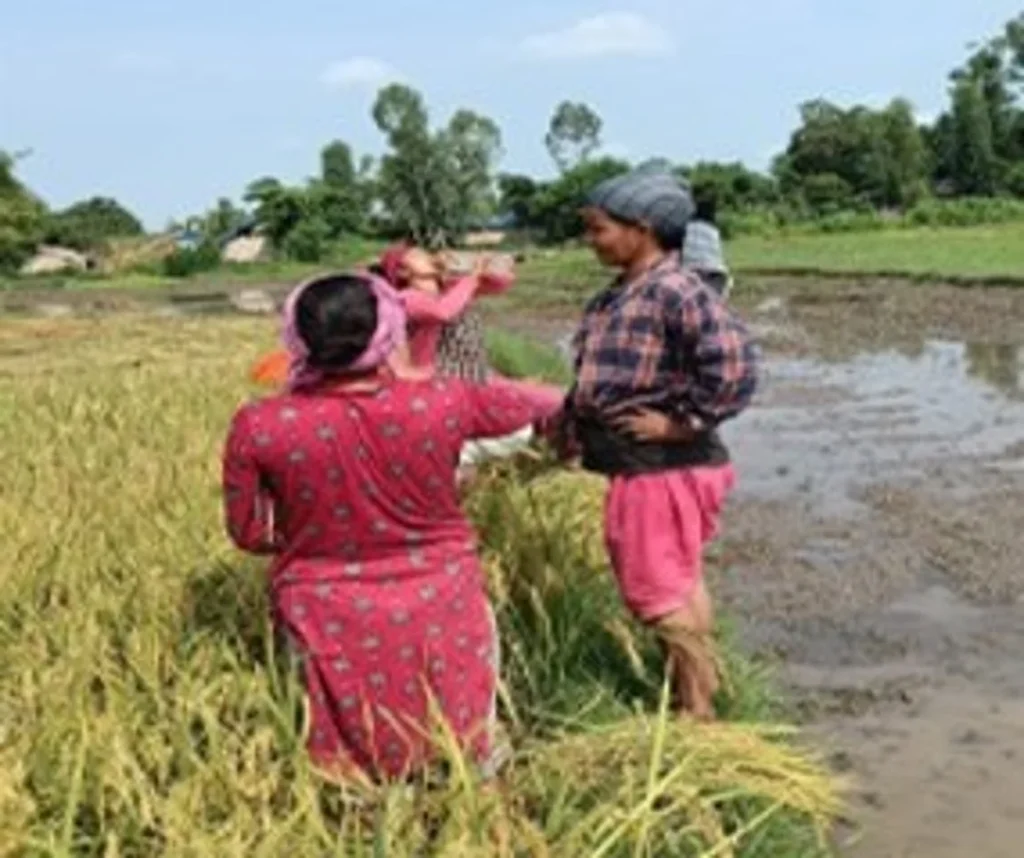
Jhilmila village, situated in Ward No. 5 of Beldandi Rural Municipality, was traditionally a wetland where only one-season crops were cultivated. Residents avoided farming the land due to its wet nature. However, over the past 2–3 years, at least 50–60 households from Milan CDG and Shuklaphata CDG have started cultivating a special variety of rice called ChaiteDhan, suitable for the area. This transformation began through discussions led by community educators on food security and land utilization.
The local government (Palika) has supported this change by constructing canals to improve water drainage, which has enhanced the land’s quality. As a result, some areas now support two cropping seasons: paddy in the first and wheat in the second. Farmers now preserve ChaiteDhan seeds and share them with neighbors, strengthening social bonds. Planting and harvesting are done collectively, fostering a sense of unity within the community. Additionally, the Palika provides subsidies to farmers cultivating ChaiteDhan, encouraging continued production and food security.
Previously, families could not produce enough food for a year and often had to go to India for work. Now, they produce sufficient food for the entire year, and some farmers even have surplus crops to sell. This success has brought hope and happiness to the community, turning Jhilmila from a single-season wetland into a productive, two-season farming area.