In Shaktinagar village of Ward No. 1, Tikapur Municipality, seven Tole Lane Organizations (TLOs) have been established.After the formation of these TLOs, the community adopted the Code Picture method to identify local issues and find solutions facilitated by Community educator. Through coaching sessions and surveys, it was discovered that many women in the area were experiencing lower abdominal pain.
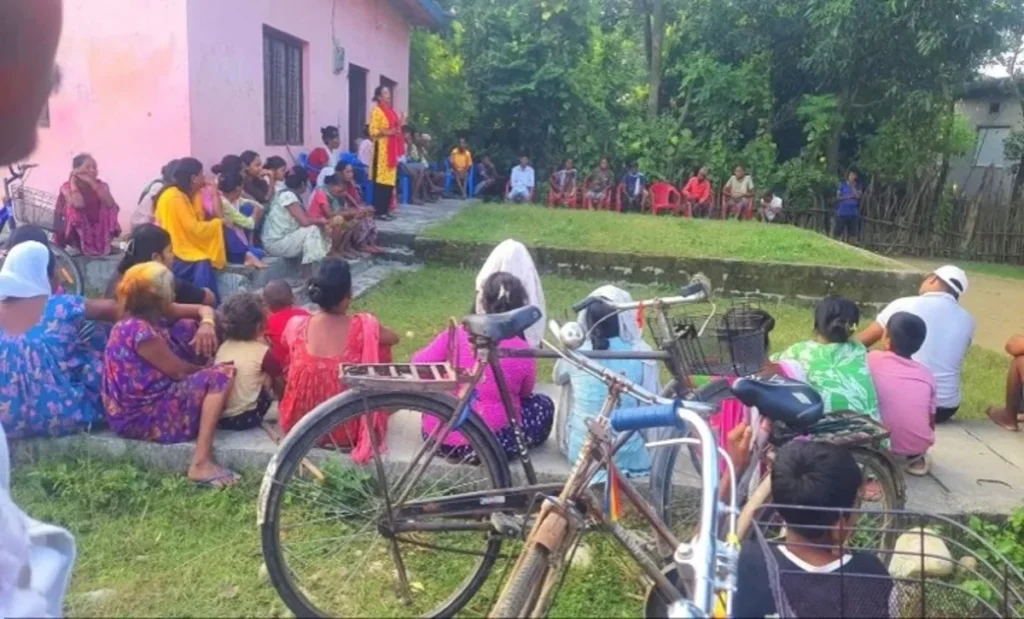
Focusing on this concern, the seven TLOs of Shaktinagar delved into discussions about women’s abdominal pain during their monthly meetings using the CODE tool. The conversations revealed that the problem was not limited to a single ailment but uncovered various hidden health issues within the community. It was also noted that poor and vulnerable families often struggled to afford medications or medical care. Consequently, discussions on health protection and healthcare access gained momentum in the TLOs.
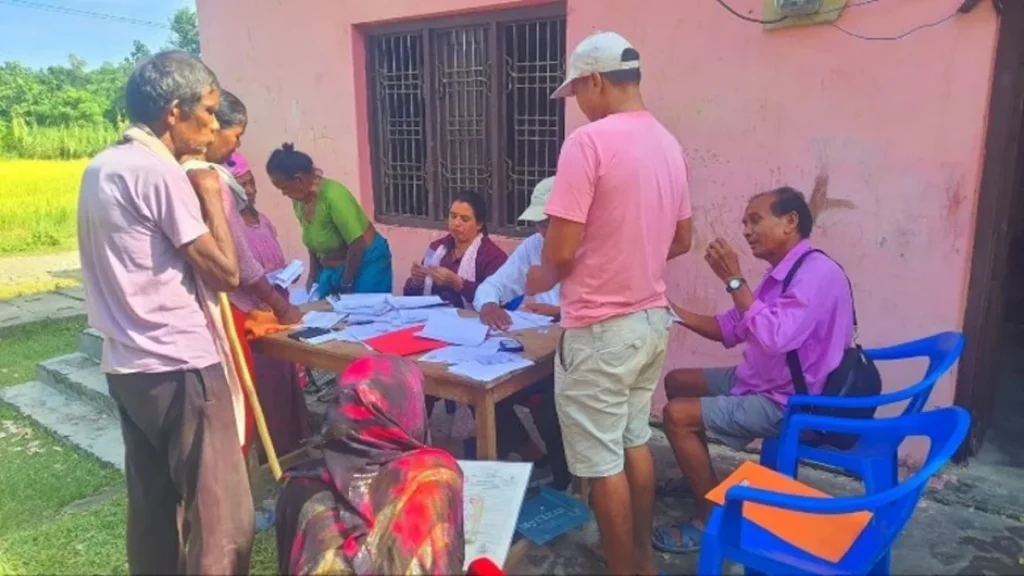
During the monthly meetings, it was decided that the community needed detailed information about the advantages of health insurance. The TLOs then collaborated with health institutions and invited Ms. Surya Devi Bhattarai, a Health Insurance Facilitator, to provide orientation. Ms. Bhattarai elucidated the health insurance program, explaining its procedures, benefits, and how it could alleviate the financial burden of treatment. Subsequently, interest and enthusiasm for health insurance surged across all the toles, resulting in 68 people enrolling in the program.
Presently, community members are reaping the benefits of health insurance firsthand. The cost of purchasing medications has decreased, and accessing treatment has become more convenient when they fall ill. The experience of the seven Tole Lane Organizations of Shaktinagar vividly illustrates how facilitation, collective discussions, accurate information, and informed decision-making can bring about significant changes in a community grappling with health challenges.
Milan Bista from the Urban Health Institution in Jyotinagar reported that the Tole Lane Organization formation program, implemented by Sahakarmi Samaj, has enhanced the efficiency of local health services. It has facilitated the delivery of services to previously hard-to-reach areas.
He also mention ed that the program has increased citizen awareness and knowledge. Previously, many individuals would arrive without understanding the procedures, leading to challenges in administrative tasks due to early or late arrivals. With improved information on service delivery, citizens now arrive well-informed and punctual, making service access smoother.
Bista emphasized , “I have observed a notable difference in the approach of Sahakarmi Samaj compared to other organizations. While some organizations focus on budget spending within set deadlines, this organization maintains direct community engagement, raising awareness about service delivery and empowering citizens with information and skills.”