The family’s economic condition was weak. Her brother-in-law had a mental health condition and was not in a position to work. Her husband earned only a small income from his mobile gallery shop, which made it very difficult to cover the family’s daily expenses.
As these challenges continued to grow, the family had even reached the point of deciding that they could no longer survive in the village and would have to migrate to Bangalore, India, in search of employment.
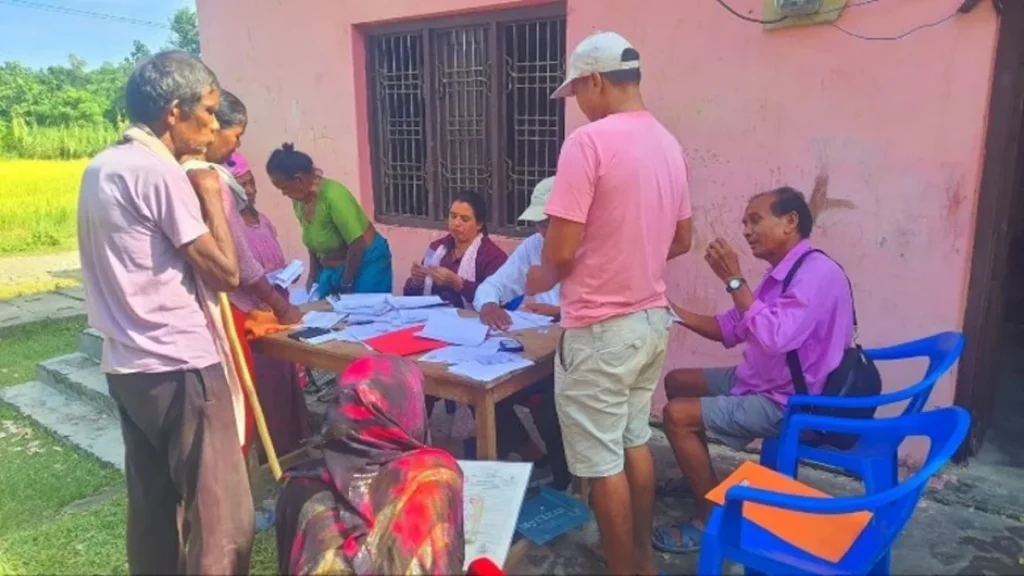
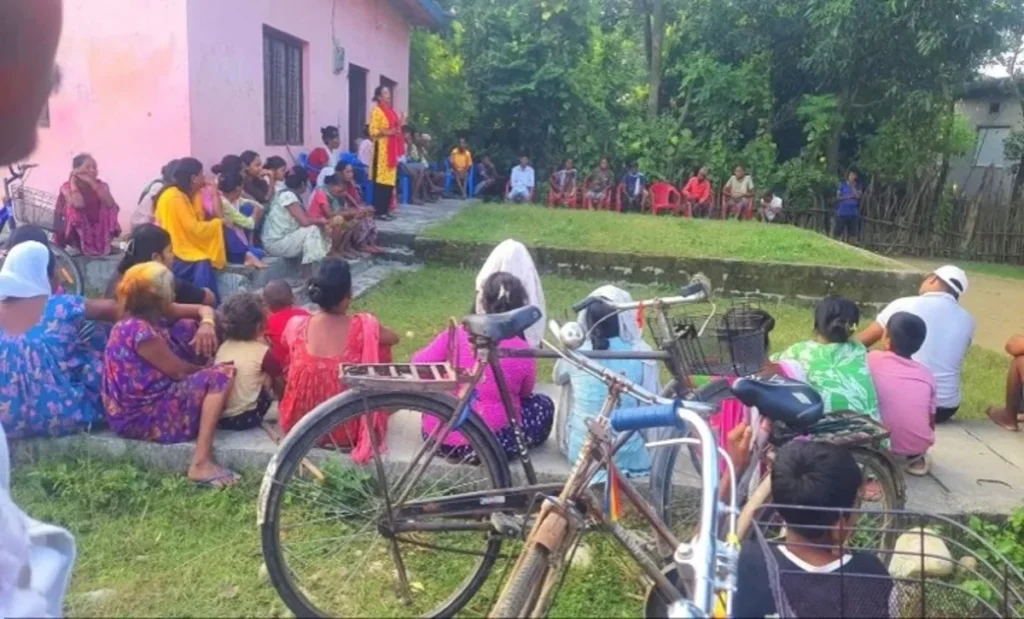
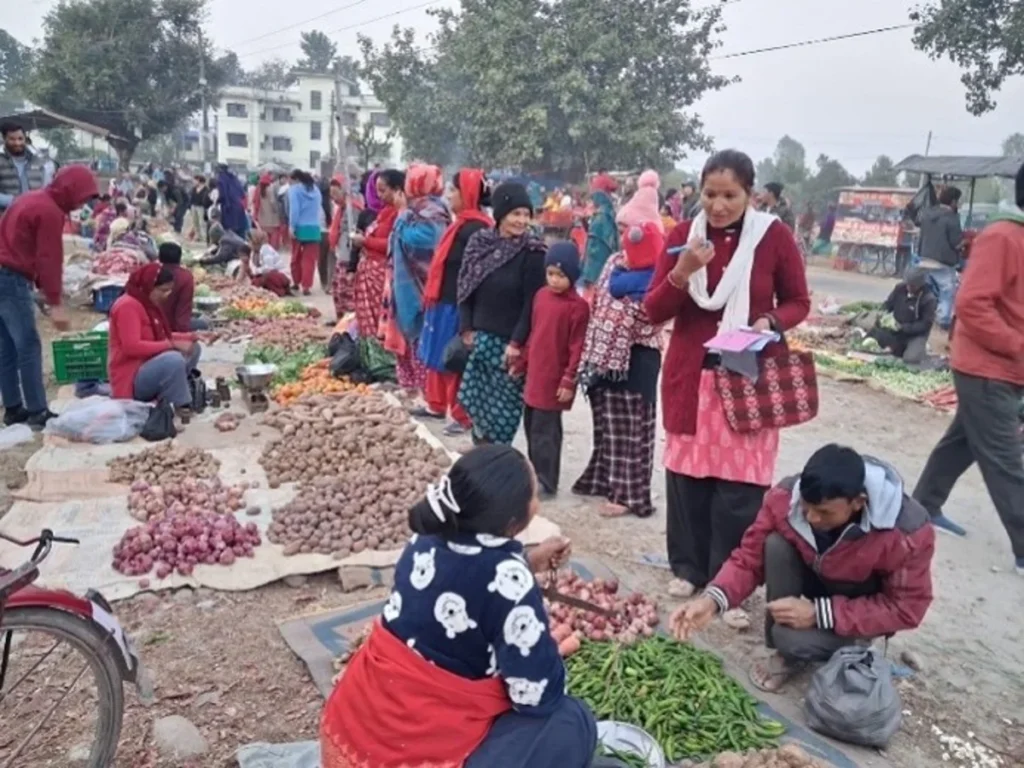
At that difficult time, during a monthly meeting of the Jagaruk Tole Lane Organization, an analysis of household income and expenses was conducted using the example of a “leaking pot” (a participatory tool to understand income leakage and expenditure patterns). Following the discussion, the institution developed a plan to establish an inclusive agricultural market (haat bazaar)in the public open space near the Eye Hospital, where farmers could sell vegetables and other agricultural produce.
The Tole Lane Oeganization submitted a proposal to Tikapur Municipality and Ward No. 1. After the proposal was approved, the haat bazaar was formally registered and began operating regularly.
Nirmala Shahi was given the responsibility of issuing receipts and managing the market. Since the haat bazaar operates twice a week, she needs to work only 8-9 days a month. Through this role, she began earning a monthly income of NPR 4,700.