Sukmali Chaudhary is a hardworking woman who once struggled with severe financial difficulties. Her family relied mainly on daily wage labor for survival, but the income was minimal and irregular, making it difficult to manage household expenses. Determined to change her situation, she decided to start a pig farming business. Her success story proves that with small investment, proper training, and continuous hard work, sustainable income is possible through pig farming.
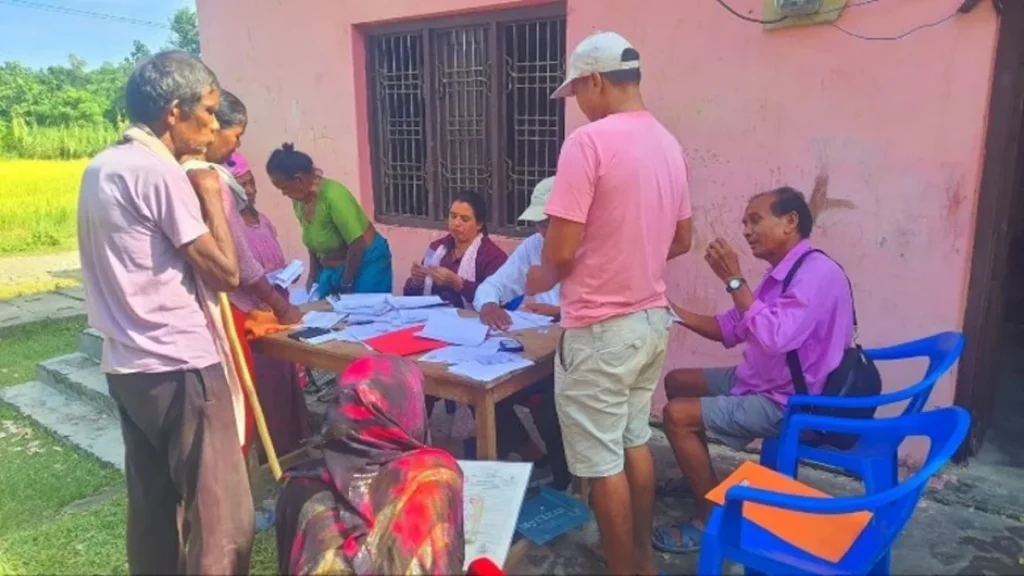
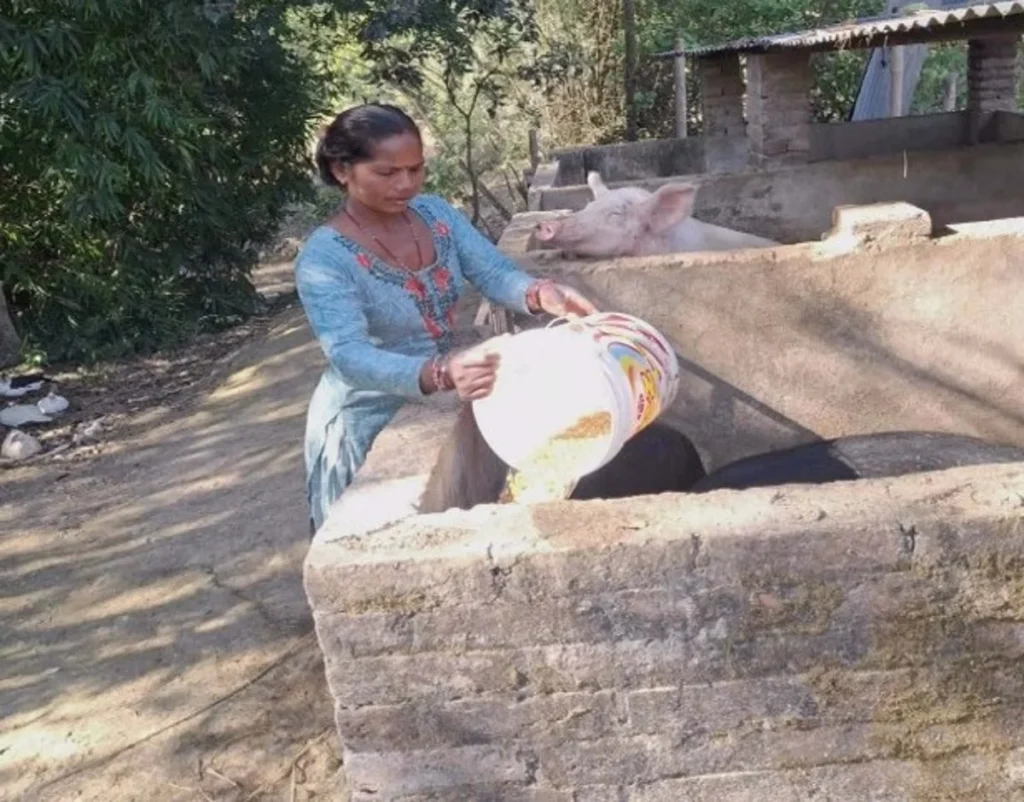
Previously, Sukmali supported her family by working as a daily wage laborer. Due to the lack of regular income, managing household expenses was very challenging. To improve her situation, she applied for a revolving fund from Samriddha Samaj Organization to start pig farming. After receiving the fund, she purchased two piglets and used the remaining amount to buy feed and repair and improve the pig shed.
Although the revolving fund was small, proper planning and training helped her start the business in an organized manner. She believes that “where there is a will, there is a way.” In a small piece of land between natural drainage areas, she constructed her house and pig shed and began her enterprise.
During the first cycle, she sold piglets at the rate of NPR 4,500 each and earned more than NPR 45,000. Since a sow gives birth twice a year, she gradually increased the number of mother pigs to three. From these three sows, she now earns between NPR 40,000 to NPR 250,000 annually from piglet sales. With the income generated, she manages household expenses, expanded the pig shed, and repaid debts taken for feed purchases. According to her, the greatest benefits have been increased confidence and patience. With strong belief in the profitability of raising breeding sows, she expanded her business. Currently, she has seven pigs in her shed and has successfully repaid the revolving fund within the agreed timeframe.
In the beginning, Sukmali received pig farming training from the local agriculture group and Samriddha Samaj Organization. After the training, she constructed a well-managed shed in a location with good ventilation and proper drainage to prevent water stagnation. She paid special attention to cleanliness, waste management, and regular feeding. She separates pigs according to age and weight, ensures timely vaccination, and follows disease prevention measures. She uses locally available feed such as rice bran, vegetables, household food resources, and commercial feed when necessary.
Within a few months, the pigs gained weight steadily. From the very first batch of sales, she earned a significant income. She reinvested her earnings to expand the business further. Currently, she regularly sells pigs and generates steady income.
Income from pig farming has made it easier for Sukmali to manage household expenses, repay loans, and support her daughter’s education. She has also created employment opportunities at home. Her success has become an inspiration for other women in the village. Her experience shows that with proper training, effective shed management, and hard work, pig farming can lead to self-reliance and economic empowerment.
Her family including her supportive husband, son, daughter, and daughter-in-law plays an important role in her success. Her husband and son help by carrying feed in the morning and evening, while also managing other work during the day. Alongside pig farming, her family is also engaged in vegetable farming and local poultry rearing, which are also thriving.
Sukmali Chaudhary’s journey clearly demonstrates that determination, proper guidance, and family support can transform lives and create sustainable livelihoods.