Kiran Khadka Ayer, from Likma, Ward No. 8 of Gauriganga Municipality, is a member of the Chetana Community Development Group (CDG) and secretary of Samabesi Bikas Sanjal. She lives in a family of nine, including her husband, who works in India, three daughters, and extended family members.
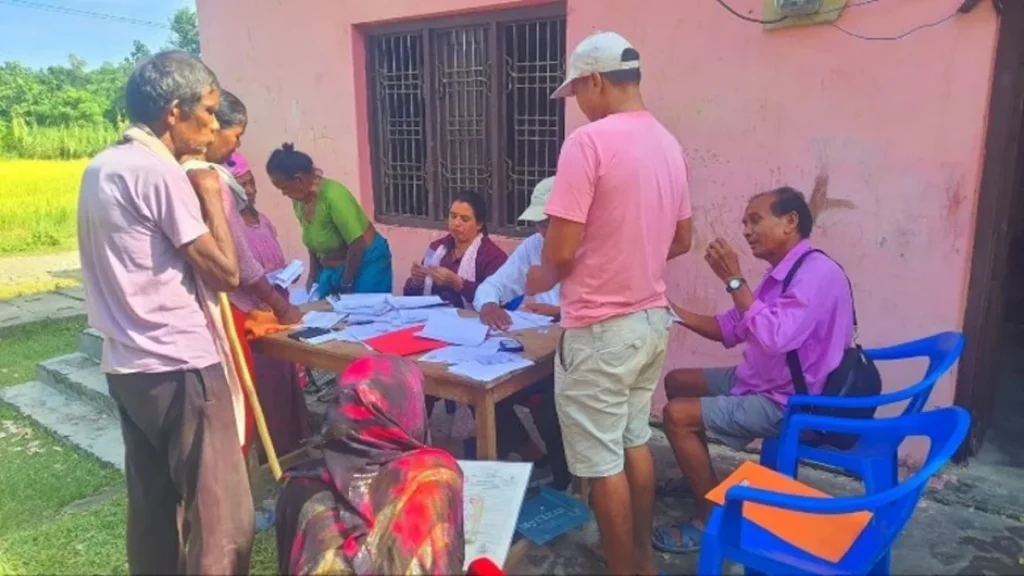
Elected as secretary of her CBNO during the formation of her CDG in 2072 BS, Kiran initially had no knowledge of bookkeeping and struggled to document the group’s modest monthly collection of NPR 10 per member. Through regular discussions, she gradually gained confidence and learned to maintain records systematically. Today, the group collects NPR 100 per member per month, which Kiran manages easily.
Kiran participated in a peer learning workshop in Dang, where she learned about many locally led interventions. A drinking water tap installation project particularly caught her attention, as her own community faced similar water scarcity. She also attended advocacy and legal representation training in Kohalpur conducted by Sahakarmi Samaj. Inspired by these experiences, she initiated discussions on drinking water scarcity in her community, using the Dang project as an example. When a grant call was announced, the group submitted a proposal, which was accepted. They also approached the municipality seeking co-financing, but matching funds were not provided. Despite this, the group successfully installed taps in all households within their community. Managing vendors, negotiating, purchasing, and transporting materials was initially challenging, but the group’s determination showed that women can effectively lead development projects.
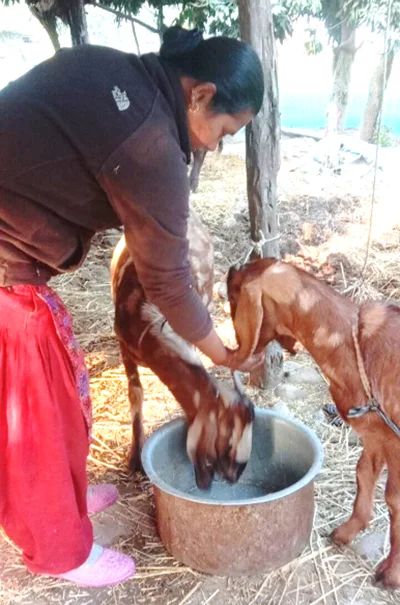
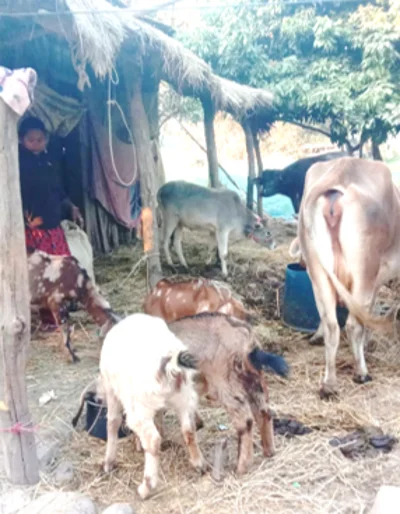
In addition to her leadership, Kiran has benefited from the group’s savings and credit system. She took a loan of NPR 25,000 to start goat rearing, managed 12 goats, sold four for NPR 28,500, and now maintains eight goats while fully repaying her loan. Being part of the group has transformed her personality, increased her confidence, and enabled her to actively fight for community development alongside her fellow members. Kiran is proud that her community has addressed a critical need, and she has grown personally, proving that women can lead, manage, and succeed in development initiatives.
Case Study 2: Nature-Based Solutions for Climate Resilience
Sim Wada of Ward No. 4, Budhinanda Municipality in Bajura District once had reliable water sources. Over time, climate change impacts, deforestation, uncontrolled firewood collection, and open grazing reduced the amount of rainwater soaking into the soil, causing the main water source to dry up during the dry season. Women and girls were forced to walk long distances to collect water, affecting daily life and livelihoods.

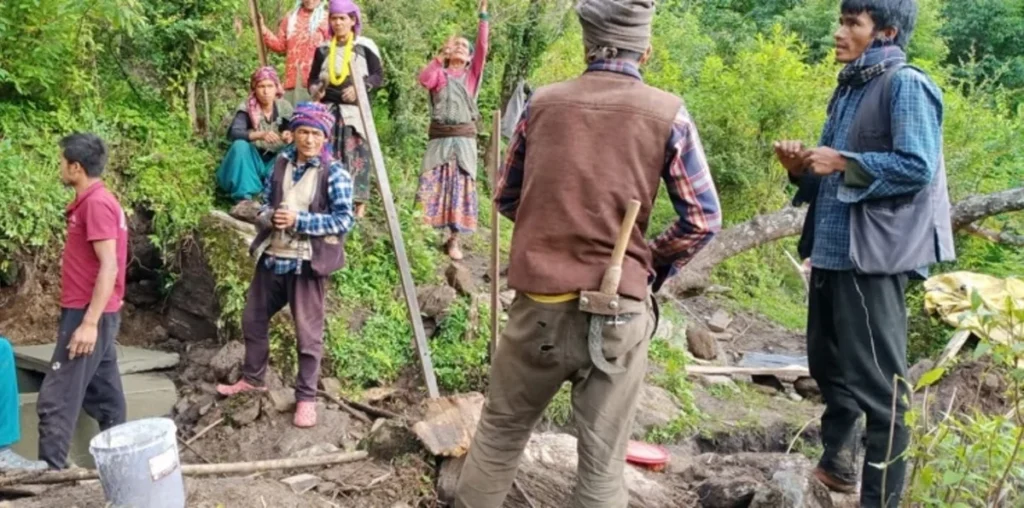
In response, discussions facilitated by a community educator during a regular community meeting with Laligurans and Sim Tole-Lane Organizations brought the TLOs members together to analyze the problem and identify solutions. The community recognized forest degradation as a key cause of declining water availability and decided to take locally led climate adaptation action. A Forest Conservation Committee was formed, open tree cutting and uncontrolled grazing were stopped, and a rotational firewood collection system was introduced. With support from INF Nepal, another NGO active in Budhinanda, households adopted improved cookstoves. Degraded hillsides were restored by planting around 1,200 local trees, including Banjh (Himalayan oak tree), Pine, Kharsu (Brown Oak tree), Peepal (sacred fig), Walnut, and Paangar (horse nut tree), and sensitive areas were protected to improve water recharge.
The community also protected the water source by cleaning the spring area and controlling soil erosion. From the second year onwards, water flow increased, and today the spring provides continuous water even during the winter dry season, including to Bhawana Basic School. Improved water access has supported vegetable farming, kitchen gardens, and reduced women’s workload, showing how community-led, nature-based adaptation strengthens climate resilience.
Case Story 3: Leadership in Action: Tika Dangi’s Inspirational Path
Tika Dangi, a 30-year-old resident of Panthatol, Ward No. 4 of Banglachuli Rural Municipality, once lived a confined life as a housewife with limited confidence and social exposure. Her transformation began after joining the Himchuli Community Group facilitated by Samaj Bikash Sanjal with support from Sahakarmi Samaj Nepal. Through regular meetings, trainings, and collective engagement, she gradually developed communication skills, leadership capacity, and confidence, enabling her to participate actively in community and municipal-level initiatives.
With encouragement from her family, group, and the organization, Tika resumed her education and completed Grade 12, which broadened her outlook and strengthened her decision-making ability. She also improved her family’s economic condition by starting vegetable farming and buffalo rearing, becoming financially self-reliant and earning respect within her community as an independent and capable woman. In 2024, Tika demonstrated strong leadership as Chairperson of a drinking water source protection and water tank construction project under the Water Justice Fund program implemented by Samaj Bikash Sanjal.
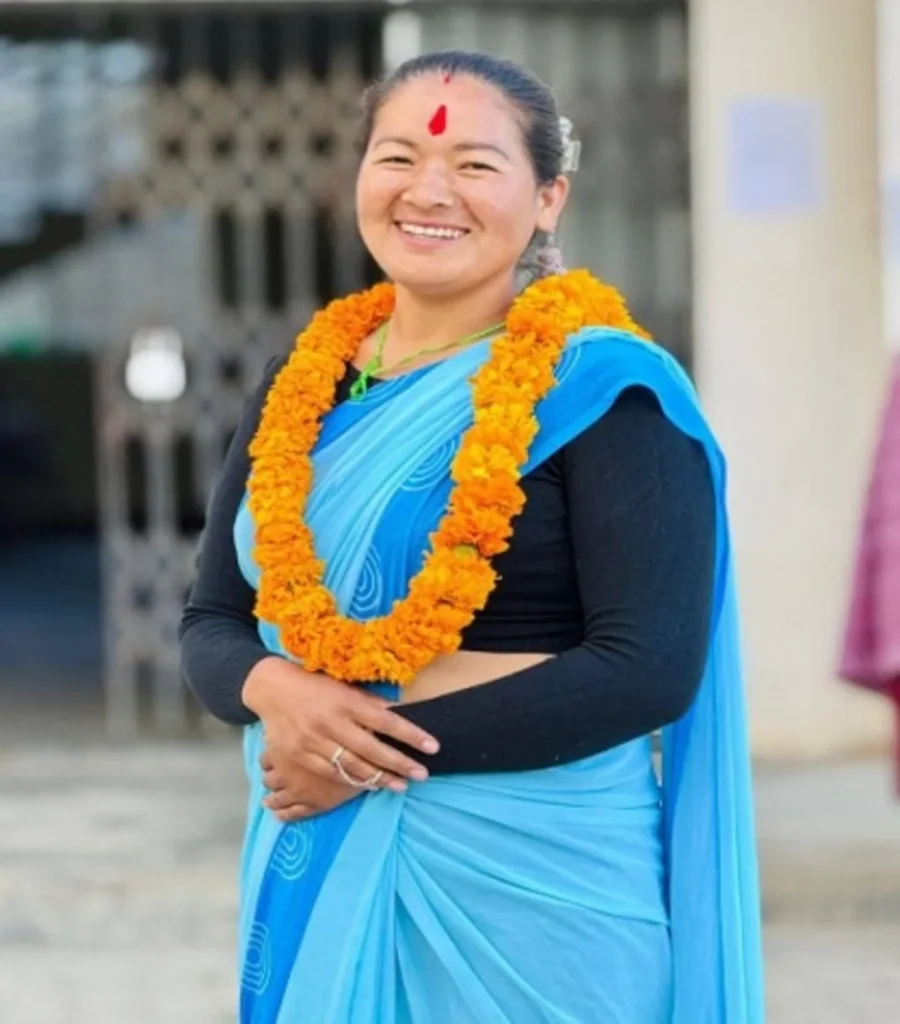
Despite technical, administrative, and social challenges, she persistently coordinated with ward and municipal offices, mobilized support from a local cement factory, and organized 10 days of community voluntary labour to complete the project successfully. As a result of her continued initiative and trust built with local authorities, the municipality has allocated an additional NPR 400,000 for another drinking water tank in the same area. Beyond infrastructure work, Tika now serves as a Female Community Health Volunteer (FCHV), supporting pregnant women and new mothers. She credits Samaj Bikash Sanjal for her transformation and shares that her future goal is to continue serving her village and contributing to the well-being of all.